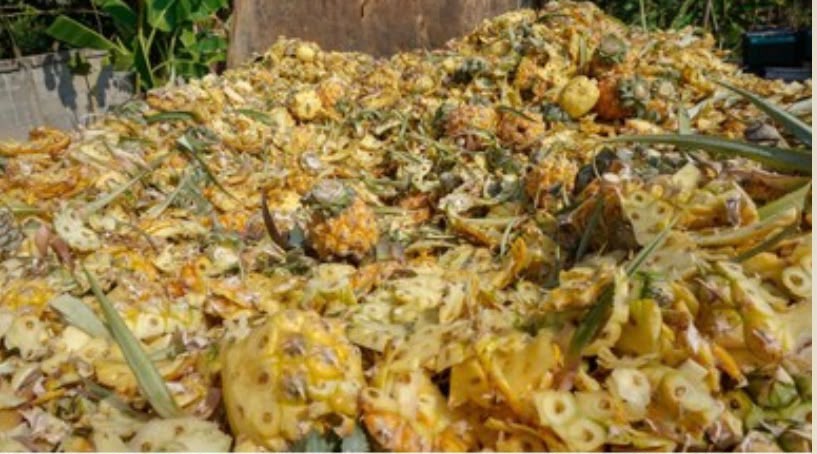
The challengeA massive, unaddressed environmental crisis.
Tanzania is a leading hub for pineapple cultivation and processing in Africa, producing hundreds of thousands of metric tons of fresh fruit annually. Driven by expanding agro-processing and juice extraction hubs across Tanzania, industrial fruit processing has surged. However, this rapid growth has triggered a massive, unaddressed environmental and public health crisis.
Pineapple processing generates immense agricultural waste streams, with peels, cores and crowns making up 25% to 35% of the total fruit weight. Currently, thousands of tons of pineapple peels are dumped directly into municipal landfills every month. Left to rot in anaerobic conditions, this organic waste decomposes and releases massive volumes of localized methane (CH₄), a greenhouse gas 28 times more potent than carbon dioxide at trapping atmospheric heat.
At the same time, regional businesses and agricultural sectors are heavily dependent on costly, imported synthetic chemicals. Most standard green cleaners currently on the market claim to be eco-friendly but still rely on synthetic, petrochemical-derived surfactants to create lather, alongside artificial fragrances that degrade water systems and cause respiratory irritation. This creates a deceptive market that continues to pollute regional water tables, compromise indoor air quality and drive economic dependency on imported synthetic inputs.